Former Employee Review Attacks: A Guide
Employee transitions are part of business. Most end professionally. Some do not.
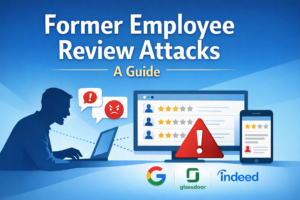
When a former employee posts a negative review on Google, Glassdoor, or Indeed, it may reflect dissatisfaction. But when multiple one-star reviews appear within hours or days—sometimes across platforms—it can signal something more deliberate.
Former employee review attacks can disrupt hiring, reduce customer trust, and create internal tension. In competitive markets, even a short-lived review spike can influence revenue and recruiting pipelines.
The difference between temporary criticism and lasting reputational damage often comes down to how leadership responds.
This guide explains how to identify a former employee review attack, how removal policies differ across Google, Glassdoor, and Indeed, what mistakes to avoid, how to respond professionally, and how to protect your reputation long-term.
What Is a Former Employee Review Attack?
A former employee review attack typically involves a sudden cluster of negative reviews posted shortly after a triggering workplace event. The timing is usually the first red flag.
Instead of isolated feedback over time, businesses may see:
Several one-star Google reviews within 24–72 hours
Detailed Glassdoor or Indeed critiques referencing a recent termination
Similar wording or repeated accusations
Reviews posted across multiple platforms simultaneously
Not every negative employee review is false or coordinated. Platforms like Glassdoor and Indeed are designed to allow workplace feedback. Criticism alone does not equal a policy violation.
The concern arises when reviews appear retaliatory, coordinated, misleading, or in conflict with platform guidelines.
Pattern—not emotion—should guide your assessment.
Why Former Employees Post Negative Reviews
To respond strategically, it helps to understand common triggers.
Many former employee review attacks follow:
Termination for performance or misconduct
Denied promotion or compensation dispute
HR investigation or disciplinary action
Workplace conflict with management
Perceived unfair treatment
For some individuals, posting a review feels like leverage. For others, it is an emotional outlet. In more extreme situations, a former employee may encourage peers or personal contacts to leave additional negative reviews.
Understanding motive does not excuse policy violations. But it helps leaders avoid reactive decision-making.
The Business Impact of Employee Review Attacks
Former employee review attacks can affect multiple aspects of operations.
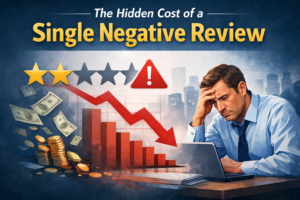
On Google, a sudden drop in star rating can influence consumer trust and local search visibility. Research consistently shows that consumers rely heavily on ratings when choosing service providers. A cluster of one-star reviews can change perception quickly.
On Glassdoor and Indeed, negative reviews can reduce applicant volume and affect recruiting quality. Candidates increasingly evaluate employer ratings before applying. A spike in negative employee reviews may discourage strong applicants or increase hiring costs.
Beyond public perception, review attacks can affect morale. Current employees who see public criticism may feel unsettled or defensive, particularly if leadership responds publicly in an emotional tone.
The reputational risk extends beyond the review itself. The response strategy matters just as much.
How to Detect a Former Employee Review Attack Early
Early detection increases the likelihood of a controlled outcome.
Businesses should actively monitor their Google Business Profile, Glassdoor employer dashboard, and Indeed company page. Real-time alerts reduce lag between posting and response.
When suspicious reviews appear, documentation becomes critical. Capture screenshots of each review immediately. Archive timestamps. Note whether multiple reviews appear within a compressed window. Compare language patterns and references to internal events.
On Google, evaluate whether the review appears connected to an actual customer experience. Google prohibits reviews involving conflicts of interest and non-customer interactions intended to manipulate ratings.
On Glassdoor and Indeed, assess whether the review includes harassment, discriminatory language, threats, false factual claims, or disclosure of confidential information. These elements are more likely to qualify for removal than general criticism.
Structured evaluation should precede any public action.
How to Remove or Report a Former Employee Review on Google
Google’s review policies focus on authenticity and conflicts of interest. Reviews must reflect genuine customer experiences.
If a former employee posts a review that clearly does not relate to a customer transaction, it may violate Google’s conflict-of-interest guidelines. Additionally, reviews that include harassment, threats, or demonstrably false claims may be subject to removal.
When reporting a former employee Google review:
Identify the specific policy section that applies.
Provide documentation supporting your claim.
Avoid speculation or emotional framing.
Google evaluates reports against written policy standards. Simply stating that a review is “unfair” is unlikely to result in removal.
If the review remains live after initial reporting, escalation may be appropriate, particularly if the violation is clear and documented.
How Glassdoor Handles Negative Employee Reviews
Glassdoor exists specifically to host workplace feedback. As a result, negative opinions about management style, compensation, or culture are generally permitted.
However, Glassdoor does prohibit:
Threats or harassment
Personal attacks
Discriminatory content
Knowingly false factual statements
Disclosure of confidential or proprietary information
Removal success often hinges on demonstrating that a review crosses from opinion into policy violation.
For example, stating “management was disorganized” is protected opinion. Claiming specific illegal conduct without evidence may qualify differently.
Each report should focus strictly on policy language—not on emotional rebuttal.
How Indeed Evaluates Employee Reviews
Indeed’s review policies are similar to Glassdoor’s in many respects. The platform allows workplace feedback but prohibits abusive or misleading content.
Negative Indeed employee reviews may qualify for removal if they contain discriminatory language, harassment, threats, confidential information, or demonstrably false statements presented as fact.
Because employment platforms are designed for employee commentary, removal requires a careful and policy-driven approach.
What Not to Do During a Former Employee Review Attack
The most common reputational damage does not come from the review itself. It comes from the response.
Publicly accusing a former employee in a review reply increases legal exposure and can escalate attention. Even if you are certain of the source, speculation should remain internal.
Threatening legal action in a public reply often amplifies visibility and may attract additional commentary.
Encouraging current employees to leave positive reviews to counterbalance negative ones can violate platform guidelines and undermine credibility.
Engaging in argumentative exchanges rarely improves outcomes. Prospective customers and job candidates evaluate tone. A calm, professional response builds confidence. A defensive reply can raise red flags.
How to Respond Professionally to Former Employee Reviews
If a review remains visible after reporting—or does not qualify for removal—public response strategy becomes essential.
The objective is not to correct every detail. It is to demonstrate leadership.
A strong response typically acknowledges feedback without validating allegations and maintains confidentiality regarding employment matters.
For example:
We take all feedback seriously and are committed to maintaining a professional and respectful workplace. While we cannot discuss individual employment matters publicly, we encourage direct communication to address concerns constructively.
This approach accomplishes several goals. It signals professionalism. It avoids escalation. It reinforces standards. Most importantly, it communicates stability to prospective customers and applicants.
Consistency across platforms is equally important. Mixed tone between Google and Glassdoor can create confusion.
A Practical Scenario
Consider a scenario where a terminated employee posts a one-star Google review the same day as their exit. Within 48 hours, two additional one-star reviews appear from accounts created that week. Meanwhile, a detailed Glassdoor review references the same internal conflict.
In this situation, leadership should:
Document all reviews immediately.
Evaluate Google reviews for conflict-of-interest violations.
Review Glassdoor content for harassment or confidential disclosures.
Submit structured, policy-based reports.
Draft calm, consistent public responses if necessary.
The focus should remain on documentation and policy alignment—not retaliation.
When Legal Action May Be Appropriate
In the United States, defamation law distinguishes between opinion and false statements of fact. Opinions are protected speech. False factual claims that cause demonstrable harm may warrant legal consultation.
However, litigation often increases attention and extends the lifecycle of the controversy. Before pursuing legal remedies, consult experienced counsel and evaluate whether policy-based removal strategies are more practical.
Legal action should be measured—not emotional.
Long-Term Prevention and Reputation Management
While no business can eliminate the risk of former employee review attacks entirely, structured internal processes reduce vulnerability.
Professional offboarding communication, documented HR procedures, consistent leadership practices, and ongoing review monitoring all contribute to reputational stability.
Reputation management should be proactive, not reactive. Monitoring systems and documented response frameworks prevent panic during high-stress moments.
Protecting Your Business Strategically
Former employee review attacks can feel personal. They should be handled operationally.
Focus on early detection, documentation, policy-based reporting, and controlled communication. Avoid escalation. Maintain consistency across Google, Glassdoor, and Indeed.
When former employee reviews appear coordinated or clearly violate platform guidelines, structured evaluation becomes critical. Review Rescue works with U.S.-based businesses to determine whether former employee reviews can be removed under Google, Glassdoor, or Indeed policies and manages the reporting process strategically.
If internal reporting efforts have failed or you are facing a sudden spike in negative employee reviews, a professional assessment may prevent further damage and restore stability to your online reputation.